

Networking Unleashed: Building Profitable Connections. An Interview with Deana Lindo, Candace Williams and Michael A Forman

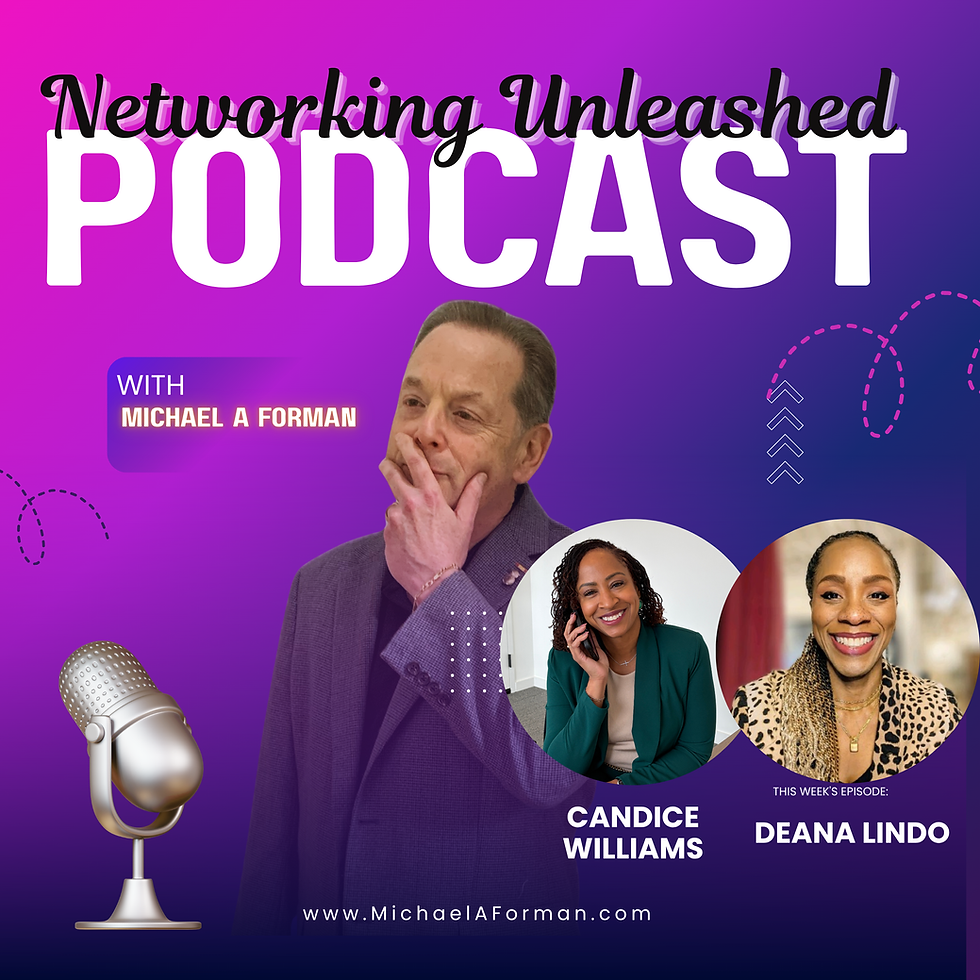
Welcome to Networking Unleashed. Building profitable Connections to show where relationships open doors sometimes, literally. I'm your host, Michael Foreman. Think about this. Very few decisions in life are made bigger than buying a home. It involves finances, emotions, timing, and confidence, and people don't make that decision because of advertising.
They make it because of trust. My two guests today are on a mission to make home ownership and and accessible through education, and they're calling 2026, the year of the buyer. We're talking about how teaching builds credibility, how real estate professionals create lasting referral networks, and why the strongest opportunities come from relationships built years before the transaction ever happens.
Very true. Whether you're in real estate, mortgage, or any real, or any relationship driven business, this conversation will show you how education, consistency, and genuine connection. Turns into lifelong clients and advocates. I'd like to welcome to my podcast today Deanna and Candace. They are quite a duo, and you'll find that out later on.
Welcome girls. I want to thank you for coming on my podcast. And why don't you give a little, cliff notes of how you got where you are today. So if you want me to start, yeah, do that. So Candace and I have been in real estate for several years now. I started my business in 2019 and one of the things that I noticed and, showing clients property, helping them navigate the home buying process.
Post getting a pre-approval letter from Candace is that there was a big gap in a lack of education and understanding of what the home buying process is, all the essential steps, what that whole journey looks like from pre-approval all the way to the closing table and beyond. And one of the things that we decided to do was try to fill that gap, from an educational perspective.
And I'll let Candace kinda share her thoughts around how she got here and her experience in working with buyers as well. Yeah, absolutely. So like Deanna came from a corporate setting, had been in corporate industry for 15 years and said, Hey, how do I make an impact that is everlasting in an area that people.
Think is unachievable and it led me to real estate. Now I'm not, and I'm not a realtor, I'm a mortgage lender, so I deal with the finances, which is in alignment with how I actually think and assess value. In real estate transactions. So for me, home university and partnering with Deanna, it is a logical step for anyone that is interested in purchasing because the education is what's essential.
So that you can make your decisions more effectively. Yes. We always say buying a home is not one decision. It is several micro decisions that come together in order to complete that transaction. You're so right, and I don't know if Deanna told you, but I was involved with the mortgage industry myself.
I was a VP of lending and I really I can't wait to hear some of your answers. I feel like you're gonna test me a little bit, Michael. Okay. Here we go. Home buying is emotional and financial. Why does trust matter even more in this industry than in most others when building relationships? Yeah. So trust is a core piece of the relationship that you build with your clients, right?
And the relationships that we build with our clients. Because once people trust you, right? Once they know you, like you, trust you, then they're more apt to do business with you, right? Buying a home is literally one of the biggest, most important largest purchases that you're ever gonna make, as an adult.
And some of us do it many times, for those of us who are doing it for the first time, partnering with someone like myself and Candace, folks that have a heart to serve, who are experts in our individual spaces, in our individual lanes, and who wanna make sure you as the client have all the information that you need to make those informed decisions that can, those micro decisions that Candice talked about.
Trust is absolutely crucial. Yeah. And you can't shortcut, shortcut, trust, like there's no shortcuts. There's no way to advance it and to speed it up. It's built over the course of that relationship. And I always tell clients. This is probably going to be the most intimate relationship that you've had other than your significant O other, because we're talking about everything.
I'm digging into your past. I'm digging into the future. I'm looking at your current situation, and you're opening up all of your information to me. Yes, I have to create trust very early in that process so that people will tell me one the truth. And number two, be open to ask whatever questions they have buried deep inside that they're either embarrassed to ask or just unsure.
So building that trust is essential. Yes, absolutely. Deanna, you hit the point. When you said, know you, like you, trust you, then they'll do business with you. Know you well. Everybody knows you guys, right? They know your faces. You've been around, right? Like you, that kind of narrows it down a little bit because not everybody's gonna like you, right?
But know you like you, but trust it. That's such a big factor in everything that you do, that they have to trust you because if you don't gain your trust. Then you lost, right? Yeah. So that's what you're working on. All right? You focus on education through home university.
How does teaching, first, how does teaching first change the way people connect with you? Compare to selling first. Yeah. So we try not to sell our point is to essentially educate. And guide and advise. Home university home simply stands for home ownership made easy. And the reason why home ownership becomes a lot easier when you are educated on the process is because you are, you have more clarity, you are more confident, right?
So that you can make an informed decision. Many of the first time home buyers that we've worked with, they don't know what questions to ask. They have no idea. So they're really relying on us, the experts to guide and advise them. So that's why the education piece is so important, and that's why Home University essentially fills that entire gap for them.
We literally take them from, Hey, I'm thinking about buying a home, really assessing their buyer mindset to getting to the closing table and beyond. 'cause we teach them how to grow and protect the asset as well. Candice, do you want to add anything to that? No, Deanna did it perfectly. It's not a sales environment.
No, it's not a sales environment. It can't be a sales environment initially unless that person has already achieved certain milestones. That commitment to purchase. The understanding of why I'm purchasing other than just seeking shelter. Yeah. And then it's the, okay, what loan option is best for me?
That probably is the only part where it gets. It can feel like it's salesy or do you wanna buy down your interest rate? Yeah. But other than that, it is the education, which is the core component, so that they're informed and confident. Now we can go into the process, and let's be honest, I can see how people can view real estate and real estate agents as salespeople, right?
Because a lot of them view themselves that way. I've never viewed myself as a salesperson. I view myself as a real estate advisor, real estate strategist, real estate consultant, and now real estate educator. And, both of us, like I said previously, we both have a heart to serve. So that is the place, and that is the position from which we come.
Yeah. To have an educated buyer. You want to educate them on what questions to ask. You want them to ask those educated questions because that's where they're gonna gain the most knowledge. You don't want them to ask, make sure the house is blue and I can afford it.
And you know it, it just, you want them to ask pertinent questions, but that is what home is all about, and that's what the two of you are all about. Many professionals network to find clients in real estate. Why do strong relationships often produce referrals long before someone's ready to buy?
It's is just the conversations that you have after that. Yes. The things that build the trust and the understanding and the respect, let's not forget that piece too, right? The respect for not only the role that you have or the industry that you're in, but this person understands and is connected to what I'm also thinking to achieve.
And it's helping others. So how do we go about doing that together? Yeah, so I would say it's the connection that comes in building that trust as well. 100%. The only thing I would add to what Candace just conveyed is that there is a, like a core support team as you're going through your home buying process.
It's your lender, it's your agent, and then it's you, the buyer. So that core team. Has to be a circle of trust. And as advisors and strategists to our clients, we are also a circle of advisement strategy, and in some ways influence. True. We influence their decisions by educating them and making sure they have the right information at the right time throughout the entire home buying process and beyond with our clients.
Once we close on a home. We don't say bye, have a nice life. We constantly check in with them, right? We make sure they understand how to grow and protect their assets. So once you buy this house, make sure you do all the maintenance you need to prevent, any issues happening. Make sure maintain your home value.
And then Candice can chat with them about, hey, when the time is right. Look at potentially refinancing to lower your, your overall mortgage payment. So there are things that homeowners and buyers need to know and be aware of post closing. So we don't leave people hanging. We're with them every step of the way.
Good. Very good. What does a great real estate professional do in the first conversation that immediately makes someone feel safe with working with them? I think you lead with education. I think you lead with showing them how they're gonna benefit and what value they're gonna gain from their interaction with you.
Make it all about them. What's in it for them? People are inherently, selfish. And when you're working with, clients, you're trying to understand their lifestyle goals, you're trying to understand how long they anticipate potentially being in the home, you're trying to understand what their work, life, family life looks like, right?
So that you can align a the per the perfect neighborhood, the perfect area, the perfect region that best fits what they are looking to achieve in buying their first home. And I know Candace can talk about. From a financing perspective, what that looks like on that side too. Yeah. So I take the same approach, but mine is a little bit more just listening.
That initial conversation. I'm doing more listening than I am talking. Yes. Because I want to know those things that Deanna mentioned. But I'm also listening for what could potentially get in the way. Or become a concern along the way. Those are those fears or hidden generational type understandings that they may have that they won't just openly communicate by the question you ask, but by the stories that they tell.
Yeah, so I'm doing a lot of listening initially just to. Understand them, to hear those little concerns, to not jot them down along the way. And as I hear them either come up again in conversation or we get to a point that I know that there's a pivot that needs to happen, I bring it back up and reaffirm.
You know what you, what the both of you have just told me was the makings of a perfect networking person. When you enter into a networking event or a networking meeting, what are you doing first? You're listening. First you going in with what, what's called a servant's heart. That's right. You're looking to see, okay, what. What can I do for them that will make them more successful? A line for me that I always use whenever I go to any network event is, you know something, Candace I like you, I like what you do and how you do it. How can I make you more successful? How can That's right.
Can I be a great referral source for you? And by me doing that, first of all, it takes all the pressure off my shoulders. Yeah, I don't have to sell. I'm free. I'm doing, all I'm concentrating on is how I can make your life better. How can I make you more successful? And in turn, what goes around does come around.
If you listen to Zig Ziglar or Bob Berg or some of these guys they're gonna tell you. That's the best thing to do. I have, I always recommend, when I was in the mortgage business, I would recommend a book called Raving Fan. Yes. By Ken Blanchard. Yeah. Now it's out of, it's out of Print it.
I used to get them for a dollar 95 each book, but I used to buy them 40 books at a time. Because with my business card, I would hand them the book. I love that, and I would say, read the book. It's a 45 minute read. Just read the book. It'll teach you the basics of customer service.
And then we'll take it from there. So it, and it was a very good thing. I haven't done it in years because I haven't been part of the mortgage industry, but if you haven't read it, I would go pick up that book. And the same as the One Minute Manager that's another book. So that's another.
And I keep both of them with me at all times. Alright. What does a wait, no. I asked you that already. Okay. I'm getting all confused. Okay. You're calling 2026, the year of the buyer. Yes. How should agents, lenders, and service professionals network differently in a buyer advantaged market? Oof.
That's a fantastic question, Michael. That's a great question. A fantastic question. And I'm gonna speak to this, just being in the world that I am as a real estate broker most real estate professionals will focus on mainly listings because there's a saying in real estate, if you're listing, you're, you're achieving right?
You have lots of success. In my world, I would say, both buyers and sellers, hold equal value. One isn't better than the other one. Right now we are definitely in a buyer's market, and there's a couple reasons for that. Main reason being there's a lot more inventory in the market right now.
Then there are buyers that are out there actively seeking to purchase it. Another reason that I'm sure Candace will talk about is, the dramatic reduction we've been seeing over the last, I would say 36 months in interest rates. Those two things right there. Peak buyers interest.
And then the third thing I would say is housing affordability. We're seeing it decline a little bit. You'll see homes go on the market for a certain list price, and then over time you'll see that list price go, lower and lower, that those are all good indications that we are in a buyer's market and as a real estate professional, my job is to make sure buyers are ready and have positioned themselves.
To win in this market. There's a lot of opportunities, a lot of great incentives. Sellers are very incentivized to attract the right buyers and attract as many buyers as possible. And a one big way that sellers can po I'm sorry. Buyers can position themselves to win, is to make sure, they know their numbers.
They, have been working on their credit score. They have a little money saved because. Contrary to popular belief, you don't need to put 20% down. So just making sure, again, they're educated and they are informed. That's how you win. Yeah. That's how you win. Because most buyers are not. And they know their power position, right?
They know their power position. And so I say that because as Deanna mentioned, affordability, has increased substantially for most, just based on where the market is today, how interest rates have reduced. I'd say the average interest rate that I see right now is sitting at about a six.
6.2 per six, 6.25 to be specific. But it's a great way for people to buy more and to buy what they're accustomed to. I think the biggest challenge for buyers today entering. In making that shift from renting to purchasing is that they've been renting at a rate that is equivalent to a mortgage, but they also are renting in an environment where everything is either brand new, granite countertops, hardwood floors, stainless steel appliances.
And then they get out here in the market and they look and they say, oh, wait a minute. The average purchase price is about $400,000 and you, I have to do work. So helping them really to understand, yes, your affordability has improved, but let's talk about strategically why this is the year of the buyer where you could go in.
You can get more for your money. And then you can make the investments necessary so that your equity and appreciation will increase simultaneously because this is not your forever home. And I'll challenge anyone that tells me that they are in the stage for a forever home. And they don't have, children aren't married still in their career in climbing all of those things.
Yeah. So this is your, this is one of many, this could be your first investment property. So that's why I say the year the buyer plus home university, giving them that education to know that there's more Yeah. And they should explore it. Yeah. One of the things we do in working with buyers, especially those buyers who are currently renting, like most of them are, we put together rent versus buy scenarios.
We run the numbers, we show them the numbers, and we show them over time, what wealth creation might look like if they own, versus literally getting zero wealth creation on the renting on the side if you're renting and or leasing. So we run the numbers and the numbers are pretty dynamic.
Canis forward what you say? What would you say the average lifespan of a mortgage is? I would say right now, probably somewhere between three to five years is what we typically see. So every three to five years there's a life event or some type of transition that is happening that's influencing a change.
It is either children leaving the home, so now we have a downsizing scenario. But wait a minute, I don't want shared walls because I'm not used to shared walls. So let me go purchase something else. Or I have the scenario where. I now have a promotion on my job and I'm good, and I want the house that's further out of the city and making that transition, or the school district is driving the decision.
So right. There are a lot of different things that I see, but I would say on average about three to five years is what I typically see. Okay, because I, I know the numbers and for a typical mortgage, you're paying interest more than principal for the first 17 years. Oh yeah, absolutely.
So anybody who's got that higher interest rate, I would suggest. Buy the house. Just buy it. If it comes down and we used a point as a factor, when it comes down a point, then refinance. Get, and you get some, maybe get some money out and do something to the house. But that's, that's the mindset that you have to give your consumer.
But not like me because I know what I'm talking about, the average person, you have to educate and then that's brings in home university. That's right. 'cause what you're trying to do is educate the people because don't make the best decision. And properly they'll go with their best person and understandably, it'll be the two of you since you're the ones who's educating them.
Sure. Okay. Yeah. So I'll get off my soapbox now. Alright. What mistakes do business owners make when they only reach out to people when they need a transaction? What mistakes do who business owners make? What mistakes do business owners make when they only need a transaction? They just reach out to you in need, right?
I think the biggest mistake, that's it, the biggest, right? The biggest mistake is you reach out to, knows, reach when you're in need, it's an opportunity. It almost comes across as self like an opportunist or a, you're self-serving, right? If I'm only reaching out to you when I need something, then I know what, when you reach out, what you're reaching out for, like it has nothing to do with me.
It's definitely about you. Yeah, I agree. Totally to bring value to the relationship. Yes. Yes. Bring value to the connection. Yes. When you connect with somebody on LinkedIn, you're not going to, 'cause I hate these people. As soon as you connect, they're gonna say, I have this and this and this to buy, and you wanna buy it and everything else, and no.
No. So you bring value to the relationship. So you bring something that they want, like an article or something. Say, look. Okay. I found this, you may be interested in this. Yeah. Do that three or four times before you ask for that sit down or that cup of coffee or something else.
But that's building the relationship and that's going after them without having to do a transaction. What I asked about, yes, absolutely. Okay. How can professionals stay top of mind for years, not months? So there's the first call when a life change happens. So one of the things I do in real estate is, staying in contact with my clients, post-closing day and offering them something of value, just checking in on them offering them something of value and just staying connected, just simply doing that is huge. It's huge. It puts you, like you said, top of mind. It leverages you, it helps you stay advantaged in their mind. So doing those types of things is really crucial and important. Yeah. And I'm big on storytelling. So that's how, it's an opportunity for me to share the success of others.
Yes. That help them to be able to have the stories when they hear a certain scenario and they say, oh, wait a minute. I was talking to Candace about X and she told me about whatever it was, maybe the two of you should connect, make that connection. Yeah. So sharing the success of others, talking about stories, giving them real examples that they will relate to, but also experience has led to, referring customers that come back, or prospects that I've never worked with before, but they've told a friend to contact me.
Being a professional networker myself stories sell. Right people, they hear facts and figures from everybody. And I can, I'm the best at this and I'm the best at that. And you should look at this because this is 3.9567 and you know everything else, right? But if you sit there and you talk to them and you give them a story.
They remember you and say, oh, you know what, Kansas told me that story and it was really good. And ex, this happened, so stories sell. So you're absolutely on target with the storytelling. And Deanna, you probably have a thousand stories about, my networking group, it's still okay.
Where does collaboration between agents, lenders, inspectors, and advisors strengthen relationships instead of creating competition? Ooh, that's a fantastic look at us. Fantastic. That's a fantastic question. And I would say we are like the poster children for collaboration. So what I love about Candace is that she is smart, she's experienced, she has a servant's heart just like me.
She is really good at listening and making sure she truly understands. What her clients need. And then also challenging them if what they say they need isn't probably really what they need, but she does it in such a nice way. And I'm the same way. Yeah. I'm the same way.
So we compliment each other extremely well. And we're both focused on educating our clients because that's gonna give them clarity and confidence through the process. And it also. Makes their experience at the end of it, a great experience, successful. We had a client that we worked with a couple years ago.
We were at the Gwinnett Rotary event, speaking about home university and what we were doing, and she was in the audience and we didn't know if she was gonna be there. And so we're in the QA portion of the event and she just impromptu talks about her experience with us. She was like. They made our home buying process so easy.
I was like, yes, that's exactly that's exactly what we want. And I was like, pause. I said, can you say that again? And I recorded it and I put it out on social media. But that collaboration between the mortgage lender and the real estate agent, like I said, the buyer is huge. And then there are other ancillary vendors who provide services as well throughout the home buying process for the buyer.
Like the appraiser. Yeah, like the home inspector. Absolutely. Roofer, all critical title company, real estate company, like all these folks, right? Are crucial. And so it's really important that we have really good partnerships and relationships with those folks as well, because as we, refer and put those folks in front of our buyers, our credibility and our reputation is going along with them.
So that whole collaboration is key, like you mentioned. Yeah and I would say too, real estate and customer service. A team sport. Yes. And so that's what we've realized. Yes. Working with Deanna is phenomenal. Deanna Well she is a go-getter. Like we are never idle, we're always working on something.
And she's inspiring too, right? She really, yeah. You really so sweet. Just some of the ideas that she has, but also the approach and then how we're able to collaborate together. Is how we've gotten this far, to be honest. And home university is exactly that. Like how many times have you seen a realtor and a lender sit down, create a curriculum, execute the curriculum in, I would say normal, easy to understand bite-size modules.
Yes. That someone can go in and then be able to have a better understanding, but then exercise their understanding with all of the downloads that immediately Yes. Working together is not a competition for us ever. No. Because we are both agreeing that whether we get this client together and we don't always work on transactions together.
No, we don't. But whether we get this client together or we don't help this person in this capacity of a closed new home, we've aided them in other ways together. Yes. And so that's what we try to focus on is that collaboration and connection. You have somebody 'cause you know you're not gonna be able to help.
Everybody. That's it's understood. And do you have a list of people that say, okay, look, I really can't help you. That's not my specialty. I'd rather you get somebody with, that's their specialty. Do you have that list of people that you go to, like your go-to list saying, look, you know what, this person can now a, as a lender, you probably have that list of those off the wall. Loans, and you have those, but as a real estate person, as a professional, you say, look, you know what I don't do commercial per se, but I have this person, so by having that list and at the ready to offer that person the, they might be saying to you. But I came to you and you really can't help me, so you, I am helping you by putting you with the right person. That's right. Do both residential and commercial. But I don't do it everywhere in the state of Georgia.
I'm only licensed here in the state of Georgia, but I don't do it everywhere in the state of Georgia. So I do have relationships with other real estate agents and brokers that I trust, throughout the state. And I will refer clients to those folks if they're looking to buy. In that region that I don't necessarily support.
And then if they are wanting to buy in a region that I don't know anybody in that I don't know another real estate agent or broker, I will research it for them. I will seek out people who based on my research, I feel and know and feel confident that they will do a good job working with that person, and then I will call them up and I will interview them.
I will interview them. And then it's very, and then very the end, then I will give the client, Hey, here's three people that I interviewed. I feel confident that they can do a really good job for you, but here I want you to call them. And then here's what I want you to ask them. 'cause I give them questions.
'cause people don't know what to ask, to select a realtor. Normally they'll just say, oh, my friend is a realtor, or My friend's aunt is a realtor. I'm just gonna go with them. They just, they think we're all the same, but trust me, we're not. But I'll give them a list of questions to ask those those agents that I'm connecting them with, and then I let them make the decision from there.
I do a qualify, I do a qualifying interview. Okay. Alright. That's the answer that I was looking for. Alright. What role does consistency check-ins, updates, and education play in turning a single client into a lifelong? Ooh, you take that. Yeah. I think the consistency is the key, right? Everyone wants to know that they are important.
And they are a priority. And so the consistency is what builds that comfort and that understanding and confidence truly, yes. With that person. And they become a forever. I remember when I text you at 10:00 PM at night and you respond, right? Yes. I don't, I won't say I do that every single night, but.
There are certain needs based on personality that I pick up on that says, Hey, if the response is critical, because it shows that you are actively engaged. But you're consistent in how you approach that individual. So for me, the consistency is the key, and then that helps, to fulfill the relationship.
The consistency is also what builds trust too. Sure. And the follow up, right? And the attention to detail and, also holding the clients accountable if they, 'cause we have once you go under contract. That's when things ratchet up in the home buying process, right?
So as you're a real estate broker and agent, my job is to make sure we're staying on, on, on track with those different key dates and timelines. Because guess what? If we miss it, we're in breach. Yeah. So it's my job to make sure I am, following up with the client, making sure they understand all the different dates.
I actually put together a key date summary, and one little page for them. So they, so that they have that. But I'm managing all of that. I'm managing all that activity. All the way until the end. Okay. That's great. Okay, so let's bring this podcast full circle. If someone wanted to build a network that naturally produces referrals over the next year, what one relationship building habit would you tell them to start immediately?
Oh, that's a good question. Thank you. What to build immediately. I would say first and foremost, you have to actually go to networking events. You need to get out, you need to be outside as they say, and be strategic about which networking events you go to. 'cause not all networking events.
Michael, as we know, not all networking events are. Are the same. Some are like parties and singles events. Some are really boring. And then some are like great professional networking events where there's a ton of different industries. It's great in great energy in the room, and there's a format and a structure to it, right?
And so I would say number one, you have to be outside and actually go to networking events. And I typically try to go to, at a minimum three, sometimes. Six networking events a week, and I try to when I get there before I get there, I have a plan, I have a strategy in mind, right? I go in and I'm like, I wanna, these are the referral partners that I love to meet, and these are the type of clients that I love to work with.
So having that strategy in mind when you go in. And then also having a great follow-up strategy, which you teach us all the time in the Fusion Alliance podcast. And so I would say those are some key things. And then just making sure you cultivate those relationships where you know there's a great synergy there and there's an opportunity for you guys to both help each other build your businesses.
That's important. So Deanna took mine. I was gonna say plan. Okay. No. Have an agenda, right? Yeah. Have an agenda for networking. Not just to you can meet friends, that's great. But have an agenda for the purpose of why you are networking. Yes. Because that will center you. It'll also drive your activity.
The other thing I would say too is know your value. Understand your message. Yes. And what you bring to the table so that you can clearly articulate yes, but differentiate yourself. Yes. When you are networking early and often. Like people should hear the same thing on repeat, right? Oh, I know her.
Yeah. Oh yeah. She does mortgage lending. She helps people buy, refinance and sell. And properties like that needs to roll every single time, and that's their first understanding, but also what they remember most. So planning for sure, but then also know the value and purpose and be able to communicate that effectively.
Don't be a salesperson. It should not be a sales pitch at all. No. I'll tell you, Michael, my last my last five or six clients came from networking. It came from networking. So networking has, I believe it a lot of value and for I know, and for the industry that we're in, it's a re real estate is a relationship business.
It's not a sales business, it's a relationship business. So you have to be outside and, connect with people. And what do I say every single week? What do I say after you meet the person? What's the most important part of the conversation? What is more important than actually meeting the person following?
You have to follow up, you have to have a strategy. Yes. You can't just email them. Next week, you're gonna email them again, see what happens, see what falls out the tree. You have to have a certain, now I call this my secret sauce, but that certain follow up system, and if you follow up, if you have a system you're sure to make the sales.
Or keep the relationships agreed. So this was great. Deanna, Candace, this was great, but how can somebody get in touch with you? Either one or both? If they want to just to talk with you. Say hi, they want to go into, go to home university, or just something, what's the best way for them to get hold of you?
So if they're interested in home university, I'll scoot out of the way. They can actually scan this QR code, scan the QR code and enroll in a course, and then eventually buy SMART so they can scan that QR code. You can also go to Home University, all one word, home University dot podia PODI a.com. And then you can find both of us on LinkedIn, Instagram, Facebook.
All the major social media platforms. Yeah, absolutely. We're out there. Believe me, like Dion, we are not hard to find. I believe you. Okay. This conversation reminds us that networking is not about quick wins. It's about being the person. People trust when life decisions matter most. When you consistently educate, communicate, and stay present in people's lives, you remembered long.
You're remembered long before they need you. Try one simple step this week. Reach out to someone you helped or met a month ago not to sell. Just to check in and add value. Yeah, that's so small. Touches often become the strongest referrals later. If you found this episode helpful, be sure to like, follow and subscribe to Networking Unleashed, building Profitable Connections, so you keep getting practical insight and networking on networking and communication.
And share this episode with someone thinking about buying a home or a business. Through relationships. If you wanna strengthen how you communicate, build trust and create connections through lead that lead to opportunity. Visit michaelaforman.com to learn how I work with professionals, teams, and organizations.
So until next time, stay consistent, stay helpful, and build relationships that rely on when it ma, when it matters most. Girls, thank you so much for coming on my podcast. This was a blast. I really appreciate it. Thank you both for coming on. Thank you. You're welcome, Michael, for yes. Thank you for having us.
Well, hold on folks. Don't go anywhere. Let's hear from our sponsors. David Neal, co-founder Revved Up Kids. Revved Up Kids is on a mission to protect children and teens from sexual abuse, exploitation, and trafficking. They provide prevention, training programs for children, teens, and adults. To learn more, go to RevD up kids.org.
Henry Kaplan Century 21. When it comes to making the biggest financial decision of your life, leave it in the hands of a proven professional. Henry Kaplan Henry is a global real estate agent with Century 21, celebrating his 41st year in business. No matter where you're moving, Henry has the right connections for you.
You can contact Henry at 5 6 1- 4 2 7- 4 8 8 8.
a huge thank you to our guests for sharing such incredible insights today, and of course, a big shout out to you, our amazing listeners, for tuning in and spending your time with us. If you're interested in my digital courses being coached or having me come and talk to your company, just go to MichaelAForman.com and fill out the request form.
Remember, networking isn't about being perfect. It's about being present. So take what you've learned today, get out there and make some meaningful connections. If you've enjoyed this episode, please don't forget to subscribe. Leave us a review. Share it with someone who could use a little networking inspiration.
Let's keep the conversation going. You can find me on Apple, Spotify, Pandora, YouTube, or my website michaelaforman.com/podcast.
Michael is a business networking expert specializing in enhancing professionals' networking and communication skills to drive profitability. As a leading authority in this field, he is highly sought after for his dynamic presentations and workshops. His extensive experience has consistently led to significant improvements in corporate profitability by empowering individuals and organizations to connect more effectively and efficiently.
Digital Courses
#BusinessNetworking #CorporateSuccess #Leadership #CommunicationSkills #ProfitGrowth #ExecutiveCoaching#Conference #EventSpeakers #ConferenceSpeaker #MarketingConference #NonprofitConference #BusinessEvent#Networking #Conferenses#Profit #Sales #Communication#Podcast #networkingevents #businessowners #businessideas #businessinnovation #growyourbusiness #professionaldevelopment #businessconnections #networkmarketing #EventProfs #PublicSpeaking #SpeakerTips #ConferenceSpeaker #EventMarketing #ProfessionalSpeaker #MemorableExperiences #EventStrategy #SpeakingEngagements #BeUnforgettable #SpeakerLife #EventSuccess#NetworkingUnleashed #BusinessCommunication #PublicSpeaker #ProfessionalDevelopment #StrategicNetworking #MichaelAForman #SpeakToConnect #AwardWinner #LeadershipThroughConnection


Comments